

When it comes to successful dental implants and bone grafting, safety and quality are paramount. Vitality Bone undergoes a rigorous processing and testing protocol to ensure maximum safety, sterility, and compatibility for implant procedures.
Quick answer
Vitality Bone is processed through donor screening, tissue testing, sterilization, cleanroom processing, and quality-control review steps designed to support safe, traceable, clinician-directed bone grafting workflows.
Safety, Sterility, and Donor Screening
Vitality Bone donor tissue is processed using controlled screening, testing, and sterilization protocols. These steps are designed to reduce contamination risk, support tissue traceability, and meet applicable tissue-processing requirements.
Important quality note
Final product selection and use should always follow the clinician’s judgment, sterile technique, product instructions, and the patient’s treatment plan.
Screening and testing
Vitality Bone donor tissue is screened and tested as part of the tissue bank’s quality and safety process. Testing may include screening for:
- Antibody to Human Immunodeficiency Virus 1 & 2 — anti-HIV 1 & 2
- Hepatitis B Surface Antigen — HBsAg
- Hepatitis B Core IgG/IgM Antibody — HBcAb
- Antibody to Hepatitis C — anti-HCV
- Rapid Plasma Reagin or Serologic Test for Syphilis — STS by RPR
- Human Immunodeficiency Virus DNA using Polymerase Chain Reaction — HIV PCR DNA
Processing and Quality Controls
Donor tissue is processed in controlled cleanroom environments, including ISO Class 1000 and Class 100 cleanroom settings. Quality checks are performed before and after processing to support documentation, traceability, and release standards.
- Pre-processing checks are completed before tissue handling.
- Post-processing quality-control reviews are completed before release.
- Donor eligibility is reviewed according to tissue bank protocols.
- Documentation and labeling are reviewed to support traceability.
Why Clinicians Use Vitality Bone in Implant-Related Procedures
Vitality Bone is designed for oral surgery and implant-related grafting workflows where clinicians need a quality-controlled allograft option with clear sizing and traceable processing.
- Processed through donor screening and quality-control workflows.
- Available in multiple graft volumes for different clinical needs.
- Designed for clinician-directed bone grafting procedures.
- Useful for workflows such as socket preservation, ridge augmentation, sinus lift support, and implant-related grafting.
Order Vitality Bone for Your Practice Today!
Ensure the best results for your implant patients with Vitality Bone’s high-quality allografts.
Compare Vitality Bone Allograft Options
Explore Vitality allograft sizes for socket preservation, ridge augmentation, sinus lift support, and implant-related grafting workflows.
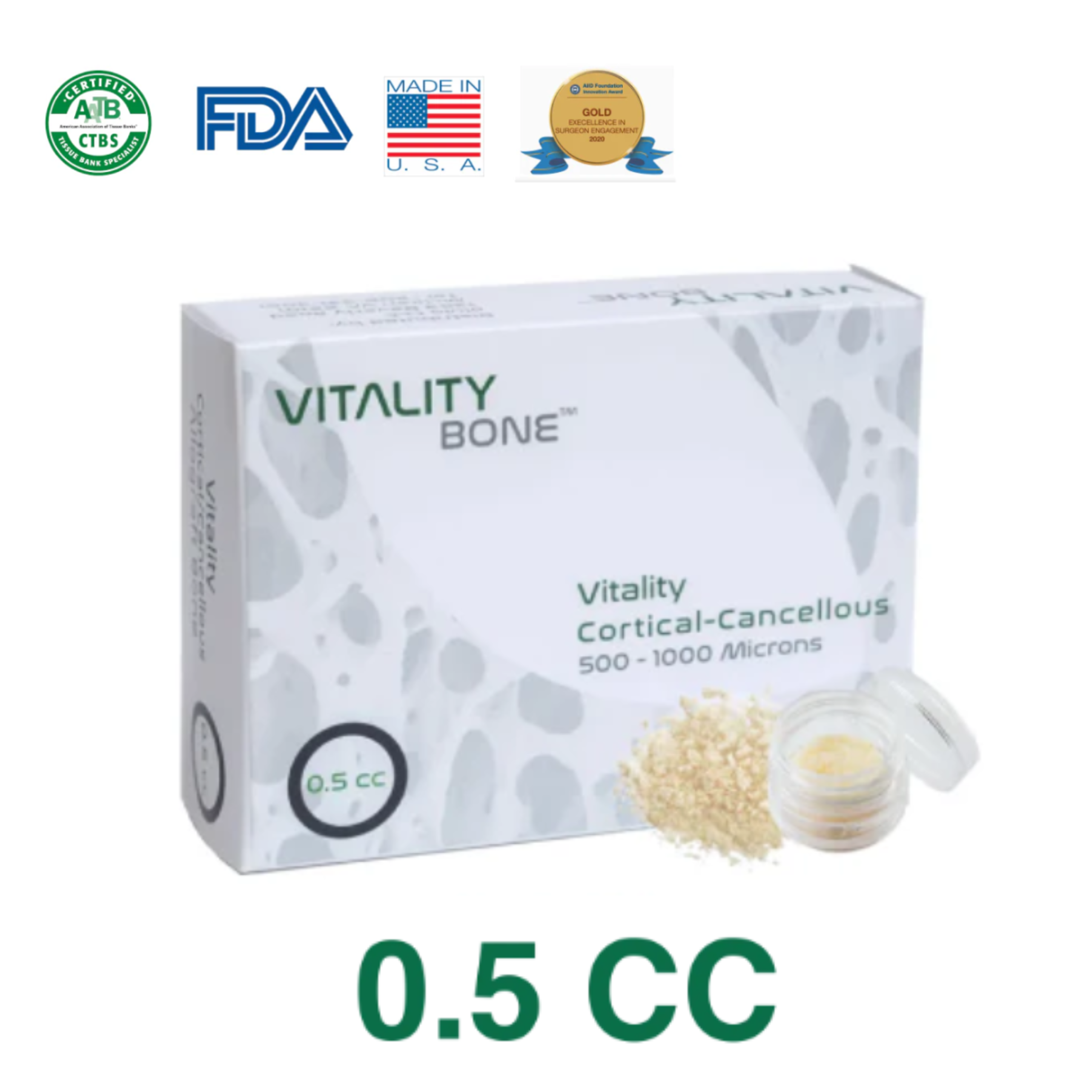
0.5 CC Allograft
Suitable for smaller socket preservation and focused grafting cases.
View 0.5 CC Product
1.0 CC Allograft
A balanced option for common implant-related grafting and ridge support needs.
View 1.0 CC Product
2.0 CC Allograft
Useful for larger ridge augmentation, sinus lift, or higher-volume grafting workflows.
View 2.0 CC ProductNeed to compare Vitality Bone graft sizes?
Review available 0.5 CC, 1.0 CC, and 2.0 CC allograft options for common oral surgery and implant-related grafting workflows.
Compare Vitality allograft products →
For product questions, contact Vitality at 1-202-331-3303.
Dr. Hamid Shafie
Director of postdoctoral implant training at Washington Hospital Center
Department of Oral and Maxillofacial Surgery