

Bone Grafting and Cost Concerns
Bone grafting is a critical step in dental implant placement and oral reconstruction. However, many patients and practices are concerned about the high costs of bone graft surgery. The good news? Choosing the right bone graft material can significantly reduce expenses—without compromising results.
Recommended Allograft Products
Explore clinically trusted allograft options for socket preservation, ridge augmentation, and implant-related bone grafting procedures.
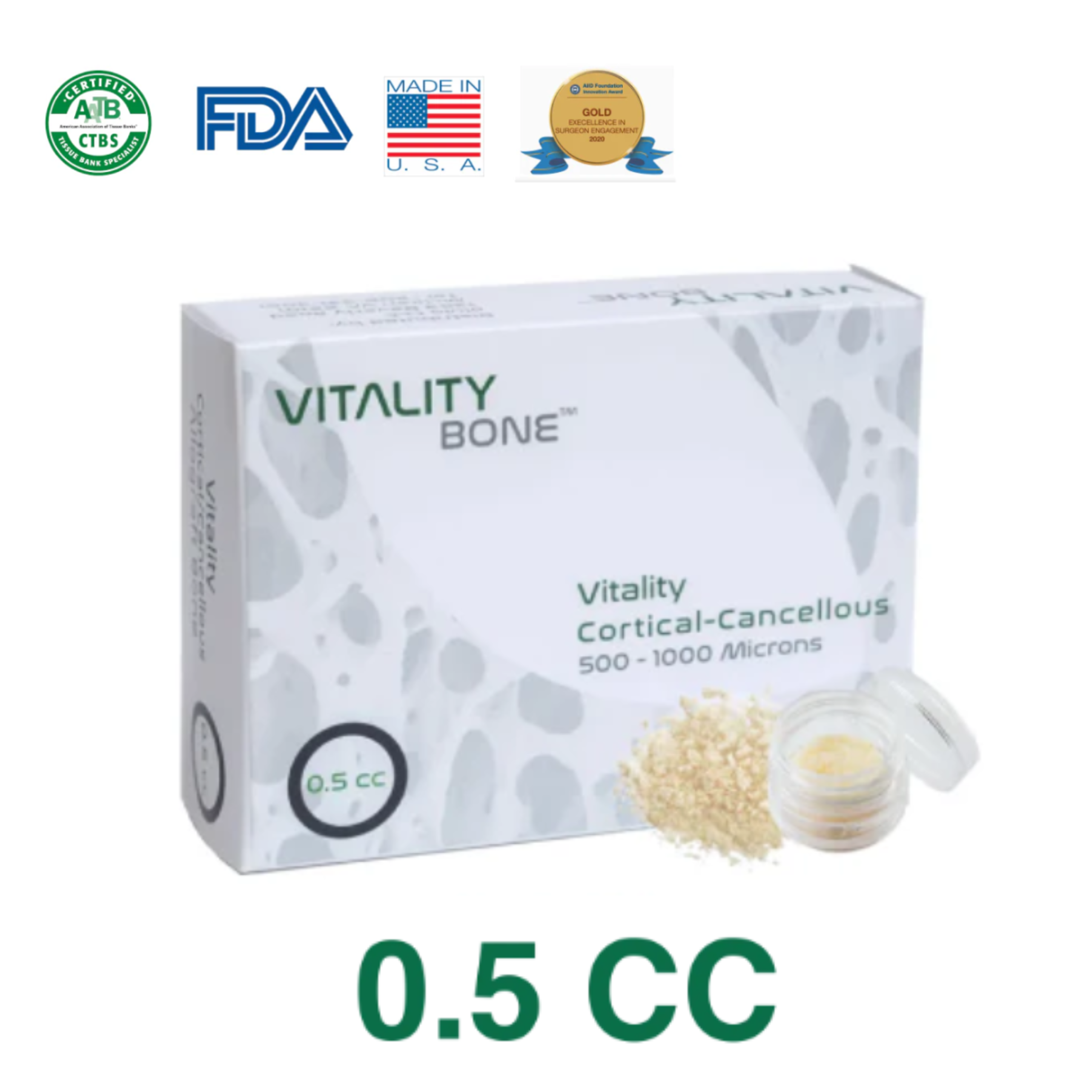
Dental Allograft 0.5 CC
Suitable for smaller socket preservation and focused grafting cases.
View Product
Dental Allograft 1 CC
A balanced option for common ridge augmentation and implant-related grafting cases.
View Product
Dental Allograft 2 CC
Useful for larger grafting needs where more particulate volume is required.
View ProductQuick cost takeaway
Dental bone graft costs vary based on graft material, defect size, procedure complexity, and implant timeline. Choosing the right graft volume can help practices plan procedures more efficiently.
Bone Graft Cost Per Tooth
The cost of a bone graft depends on the number of tooth sites.
-
For a single tooth, prices typically range from $400 to $1,200.
-
For multiple adjacent teeth, the total cost can rise to $2,000 or more.
Selecting a graft with faster turnover, such as Vitality™ Allografts, helps reduce expenses by avoiding repeat procedures and shortening treatment time.
Tooth Extraction and Bone Graft Cost
Many patients choose to have a bone graft placed at the same time as a tooth extraction. This approach can reduce the number of surgeries and lower total costs.
-
A simple extraction with socket preservation bone graft usually costs $800 to $1,500.
-
Ridge augmentation performed during extraction can increase the fee to $2,000–$3,000.
Combining extraction and grafting in one visit is more efficient and prepares the jawbone for implants sooner.
Why Is Dental Bone Grafting So Expensive?
The high cost of bone grafting reflects both the procedure and the materials involved. Key reasons include:
-
Material quality: Allografts and xenografts cost more than synthetics, but offer better healing outcomes.
-
Procedure complexity: Ridge augmentation and sinus lifts require more time, skill, and biomaterials.
-
Specialist training: Oral surgeons and periodontists may charge higher fees due to their expertise.
-
Post-operative care: Longer healing timelines mean more follow-up appointments, which add to the cost.
Choosing faster-healing materials like Vitality Bone helps offset these expenses by reducing complications and avoiding extra visits.
1. Select a Bone Graft with Faster Turnover Time
One of the most effective ways to cut costs is to shorten the healing period.
A shorter turnover time means:
-
Fewer follow-up visits
-
Less chair time for clinicians
-
Faster readiness for implant placement
Vitality™ bone grafts feature a 4-month turnover time, enabling clinicians to restore implants sooner compared to slower-resorbing grafts that can take 6–9 months.
Planning bone grafting procedures?
Compare Vitality allograft options for socket preservation, ridge augmentation, and implant-related grafting.
Compare Vitality allograft products →
2. Plan Efficient Surgical Protocols
Careful planning can prevent additional procedures that drive up costs. Use digital imaging and guided surgery techniques to:
-
Minimize the need for multiple grafts
-
Reduce surgical time
-
Lower the risk of complications
Combining efficient protocols with a fast-turnover graft creates a streamlined treatment pathway that’s more predictable and affordable.
3. Choose Grafts with Proven Clinical Performance
While low-cost grafts may seem appealing, they can lead to delayed healing and unexpected expenses down the road. A graft material with predictable resorption and bone regeneration reduces the likelihood of re-grafting procedures or implant failure.
Vitality™ bone grafts deliver consistent results backed by clinical evidence—helping practices avoid costly delays and re-treatments.
4. Educate Patients on Long-Term Value
Educating patients about the benefits of faster healing is key. When patients understand that a slightly higher upfront investment in a premium bone graft can save them time, discomfort, and additional fees, they’re more likely to commit to treatment.
Why Choose Vitality™ Bone Grafts to Reduce Costs?
-
4-month turnover time for faster healing
-
Predictable resorption to minimize re-treatment costs
-
Clinically proven to support long-term implant success
Final Takeaway
In 2025, patients can expect to pay $400–$3,000 for most dental bone graft procedures, while advanced cases can reach $5,000 or more. By choosing grafts with faster turnover time, planning efficiently, and focusing on long-term value, both patients and practices can reduce costs.
Vitality™ Bone Grafts make implant dentistry more affordable, predictable, and successful.
👉 Explore Vitality™ Bone Grafts today to simplify treatment and reduce expenses.