

Dental bone graft surgery is a procedure that restores missing or weakened bone in a patient’s jaw. Oral surgeons and implant dentists frequently perform bone grafting before dental implant surgery to enhance the esthetic outcome, ensure functional stability, and improve the long-term success of the implant. The added bone helps create a strong foundation for the implant and supports surrounding structures for optimal healing and integration.
Quick answer
Dental bone graft surgery helps rebuild missing jawbone so the area can better support dental implants, restore bone volume, and improve long-term treatment stability.

When is dental bone graft surgery needed?
Bone grafting may be recommended when the jawbone does not have enough volume or density to support a dental implant or restorative procedure.
- After tooth extraction to preserve the socket
- Before dental implant placement
- For ridge augmentation when bone volume is low
- After bone loss caused by missing teeth or infection
- To support long-term implant stability
What Happens During Dental Bone Graft Surgery?
The exact procedure depends on the treatment site and the amount of bone needed, but dental bone graft surgery generally follows a few common steps.
- The treatment area is prepared and the grafting site is accessed.
- Bone graft material is placed in the area where additional bone volume is needed.
- A membrane may be used to help protect and stabilize the grafted area.
- The surgical site is closed with sutures to support healing.
- The graft remodels over time as the patient’s own bone gradually integrates with the grafted area.
How Vitality Bone supports grafting procedures
Vitality Bone is an allograft bone graft material used in oral surgery and implant-related grafting workflows. It is designed to act as a scaffold, helping maintain space while the patient’s own bone gradually remodels and integrates with the grafted area.
How Long Does a Dental Bone Graft Take to Heal?
Healing time varies based on the graft location, procedure type, graft volume, and individual patient factors. The initial surgical site may heal relatively quickly, while deeper bone remodeling and integration usually take longer.
Why graft material matters
The graft material, particle size, clinical site, and patient healing conditions all affect how predictably the graft supports future implant placement.
Choose Your Vitality Auto-Delivery Size
Compare Vitality allograft sizes for recurring practice inventory needs. Save 30% with Auto-Delivery and receive free shipping.
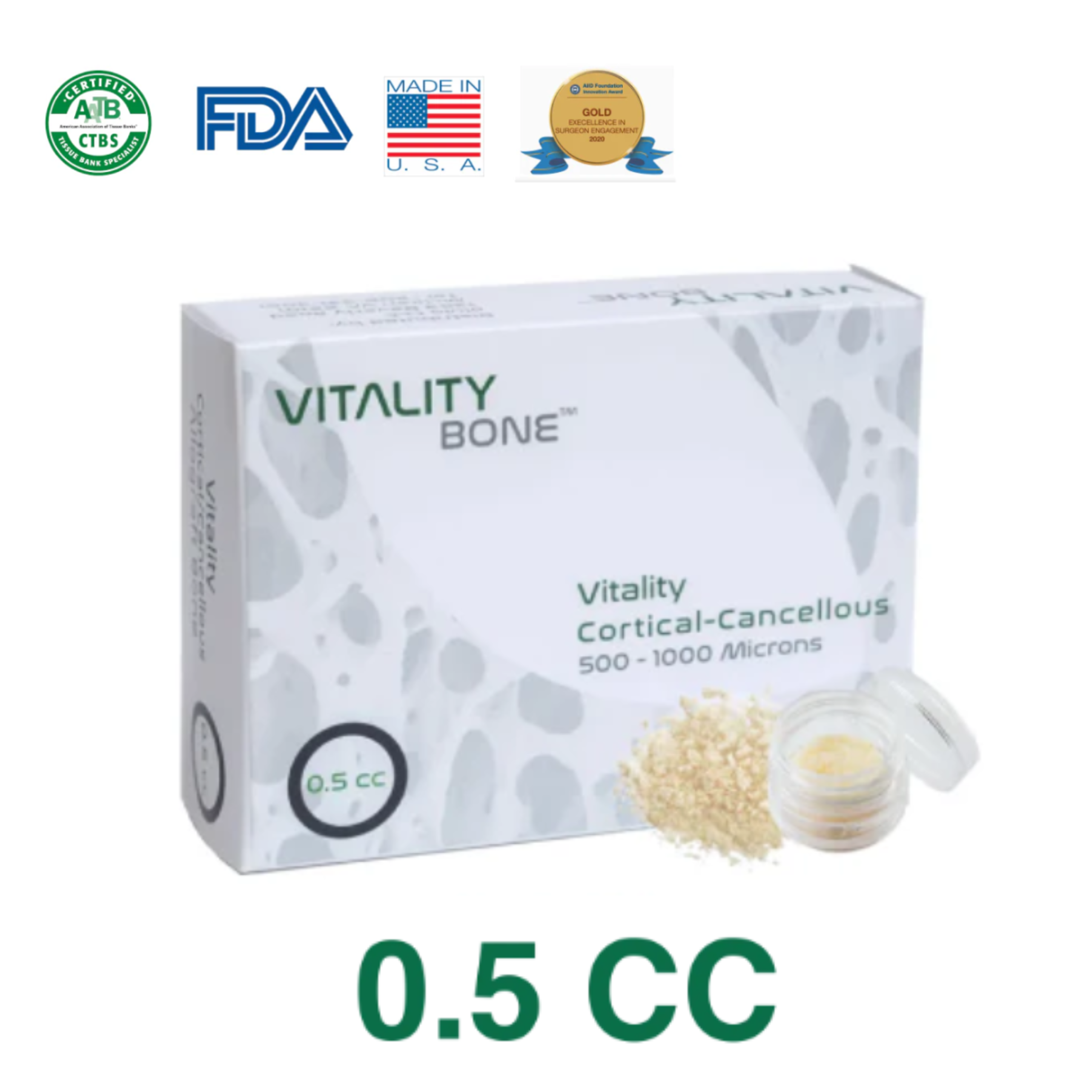
0.5 CC Allograft
$90.50 $63.35 Auto-Delivery
Good for practices that regularly perform smaller socket preservation or focused grafting cases.
- Smaller grafting cases
- Focused socket preservation
- Recurring low-volume inventory

1.0 CC Allograft
$126.00 $88.20 Auto-Delivery
A balanced inventory option for common implant-related grafting and ridge support needs.
- Common grafting workflows
- Implant-related procedures
- Balanced recurring supply

2.0 CC Allograft
$208.00 $145.60 Auto-Delivery
Useful for practices that need more graft volume for larger or more frequent procedures.
- Larger grafting workflows
- Ridge augmentation cases
- Higher-volume inventory needs